These days, whenever you open social media or video sites, you are bombarded daily with flashy, eye-catching ads like the following.
- “State-of-the-art AI-powered automated trading systems”
- “The ultimate EA with an over 90% win rate”
- “Generate hundreds of thousands a month completely hands-off”
However, let’s stop here for a moment and think deeply about this. If you could really keep winning just by handing your money over to an AI or EA (Expert Advisor) and flipping a switch, why aren’t the “true professional traders” who have survived on the front lines of the market for decades relying on such tools?
Why are they still monitoring charts with their own eyes and clicking the execution buttons with their own hands? Let me give you the conclusion first. The biggest reason they do not entirely outsource their trading to AI or machines is that they recognize the following facts:
- The market never exists merely as an “extension of the past.”
- There is a “market heat” and “reading between the lines” that machines at this stage simply cannot decipher.
In this article, we will break down the thought process step by step and explain in depth “why it is virtually impossible to consistently win in the long run by leaving trading entirely to machines,” and “what the ultimate weapon we truly need to hone actually is.”
By the time you finish reading this article, your perspective when facing the charts tomorrow will have changed dramatically.
- The Fundamental Reason Why AI and EAs (Automated Trading) Cannot Consistently Win in the Market
- The Cruel Reality and Physical Risks Lurking Behind EAs with a “90% Win Rate”
- The Ultimate AI is “Your Own Brain”! The Edge of Discretionary Trading Practiced by Pros
- How to Overcome Discretionary Trading’s Greatest Barrier: “Emotion,” and Establish Your Edge
- Conclusion: The Conductor of the Market Symphony Must Not Be an EA (Automated Trading), But “You”
The Fundamental Reason Why AI and EAs (Automated Trading) Cannot Consistently Win in the Market
The Inherent Gap Between AI’s Strong Suit—”Historical Data”—and the Market’s True Nature
Even with cutting-edge technology, there are reasons why AI cannot completely conquer the trading world. To understand this, we must first look at the fundamental mechanics of “how AI thinks.” The core of AI’s thinking is based on highly advanced “inductive reasoning.”
It is a logical deduction that finds commonalities from numerous individual cases and data to derive general rules or conclusions.
Certainly, in worlds with perfectly fixed rules like chess or shogi, or where immutable laws of physics apply, this approach is nearly invincible. Because if the data completely encompasses the past, the future is calculable.
- Surprise economic data released last night
- Geopolitical risk news that broke this morning
- The “personal anxiety” of a fund manager moving massive amounts of capital
- A chain reaction of unexpected algorithmic “fat-finger” errors etc.
The factors (variables) that move the market are literally “infinite.”
No matter how deeply you make an AI learn past chart data, it is impossible for it to perfectly predict all the “new unknown variables” that will occur today.
The market is not a convenient laboratory where yesterday’s events simply repeat tomorrow.
The True Meaning and Pitfalls of Dow Theory’s “Price Discounts Everything”
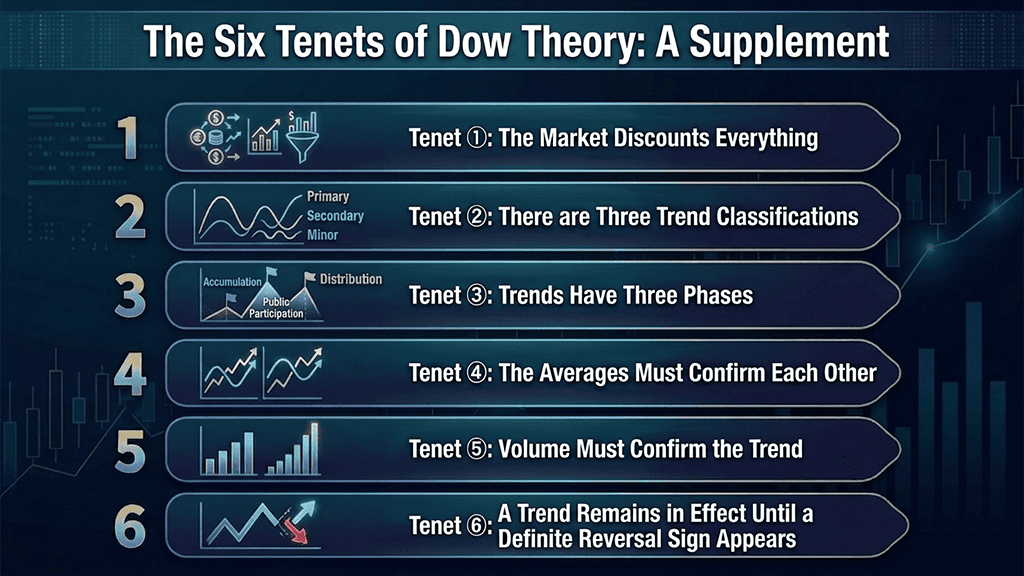
Hearing this, you might think, “If the current price contains all information, couldn’t we win by having an AI analyze it?” However, there is a fatal trap in this interpretation.
“Discounting everything” precisely means that “the current price at this very moment is merely a ‘reasonable consensus’ reflecting currently known materials (historical data, economic conditions, investor psychology).” In other words, you must not overlook the fact that while the price has swallowed the “past” to form its current shape, it absolutely has not discounted “new events that will jump into the future.”
AI predicts on an extension of the past, assuming, “Information A was reflected before, so the next move will be A’.” However, the moment completely new “Information B” or the “strong intent” of an institutional investor jumps into the market in the very next second, the price effortlessly discards its past trajectory and rapidly transforms into a “new shape” to discount the new information.
“Price always encompasses the past, but the decisive power over the next price movement always lies in new factors arriving from the future.” Therefore, constantly massaging past data while forgetting this fact will never yield an inherent edge.
Furthermore, there is the troublesome issue of “reflexivity,” which is unique to financial markets.
It is the phenomenon where the “market price” not only reflects the current situation, but the price movement itself alters investor psychology and behavior, creating new trends. In other words, the participants’ actions rewrite the prerequisite conditions of the next market phase.
What this means is that even if an AI derives a “perfect predictive model (a foolproof winning pattern),” the moment many participants see it and simultaneously place buy orders at the same point, those “massive orders” themselves become a new factor that disrupts market balance.
If everyone buys at the same place and places stop-losses at the same place, smart money will pinpoint and hunt those exact levels.
In short, the “holy grail” found in past data carries a paradox: the moment it is executed in the market, it rewrites the price’s underlying conditions, instantly rendering it “no longer a winning strategy.”
The market is like an amoeba, constantly changing shape by reflecting the psychology and actions of its participants.
The Cruel Reality and Physical Risks Lurking Behind EAs with a “90% Win Rate”
AI might be excellent at boosting win rates to 90%. However, when faced with “unexpected crashes” or “one-sided trends ignoring fundamentals” that occur in the remaining 10%, machines can suffer fatal errors.
Some might think, “Even so, with AI’s overwhelming calculation speed, couldn’t it surpass human limits and boost the win rate?”
Indeed, when it comes to instantly calculating thousands of indicator combinations and deriving the “points with the highest expected value based on past statistics,” AI completely outperforms humans.
However, this is where the most terrifying trap in the business of investing lies. That is the harsh reality of the market: “Increasing your win rate is not synonymous with walking away with total net profits.”
The Terror of “Picking up Pennies in Front of a Steamroller” and Fat-Tail Risk
One is the collapse of the risk/reward ratio. Behind the abnormally high win rate of 90% generated by AI, there is often a distorted design of “accumulating tiny consistent profits, only to spit it all out with a single loss” (picking up pennies in front of a steamroller). As long as the structure is one where a single stop-loss wipes out 9 consecutive wins, the higher the win rate, the more catastrophic the damage of a single hit becomes.
Orders are executed way beyond the specified price (slippage), or the orders themselves are rejected. AI judges based on past statistics that “it should stop here,” but the ‘heat’ of a panicked market pierces right through those calculations as if laughing at them.
The mechanical reliance that “it should work according to the settings” becomes the ultimate weakness in extreme situations. Professionals sense that “this atmosphere is a panic market where normal stop-losses won’t work,” and they manually turn off their systems before they execute. This “art of tactical retreat” is precisely the survival strategy that is impossible for AI.
The Shelf Life of an EA Due to Curve Fitting (Over-Optimization)
In today’s financial markets, ultra-high-speed algorithms known as HFTs (High-Frequency Trading) and institutional programs backed by massive capital are running rampant. They exploit structural gaps in the market, turning minute price distortions into instant profits using overwhelming communication speed and financial power.
If we individual traders step into the same arena and try to compete on calculation speed or reaction time, our defeat is 100% guaranteed right from our infrastructure—our PCs and internet connections. That is exactly why we must not fight them using their own methods (pure processing competition of numerical data).
However, that is merely taking a red pen to correct a test paper after “you already know all the answers” to get a perfect score. In the investment world, this is called “Curve Fitting (Over-optimization).”
Simply put, it’s like “memorizing only the answers” from last year’s test.
Imagine this: You want to score 100 on a math test. So, you acquire “last year’s test paper.”
It is not uncommon at all for an EA that produced stellar positive results using last year’s data to record unbelievably massive losses this year.
This is because “the market’s volatility (price amplitude), cycles, and the rhythm it beats are constantly changing like a living organism.” This is the reason for the “shelf life” where even the most brilliant EAs suddenly stop winning.
An EA specialized strictly for strong trending markets will suffer severe whipsaw losses the moment the market enters a ranging phase. Machines lack the “advanced environmental recognition ability” that humans naturally possess—to say, “The market environment has changed now, so let’s pause trading for a while.”
To state an even more cruel fact: the more widely a highly successful EA spreads among the public, the more institutional investors will calculate where those “mechanical stop-losses” are pooling and precisely hunt them down.
Ultimately, no matter how perfect the numbers you crunch with past data on your desk are, unless you actually put your capital into the live market, no one knows if it will hold up in the future market.
The Ultimate AI is “Your Own Brain”! The Edge of Discretionary Trading Practiced by Pros
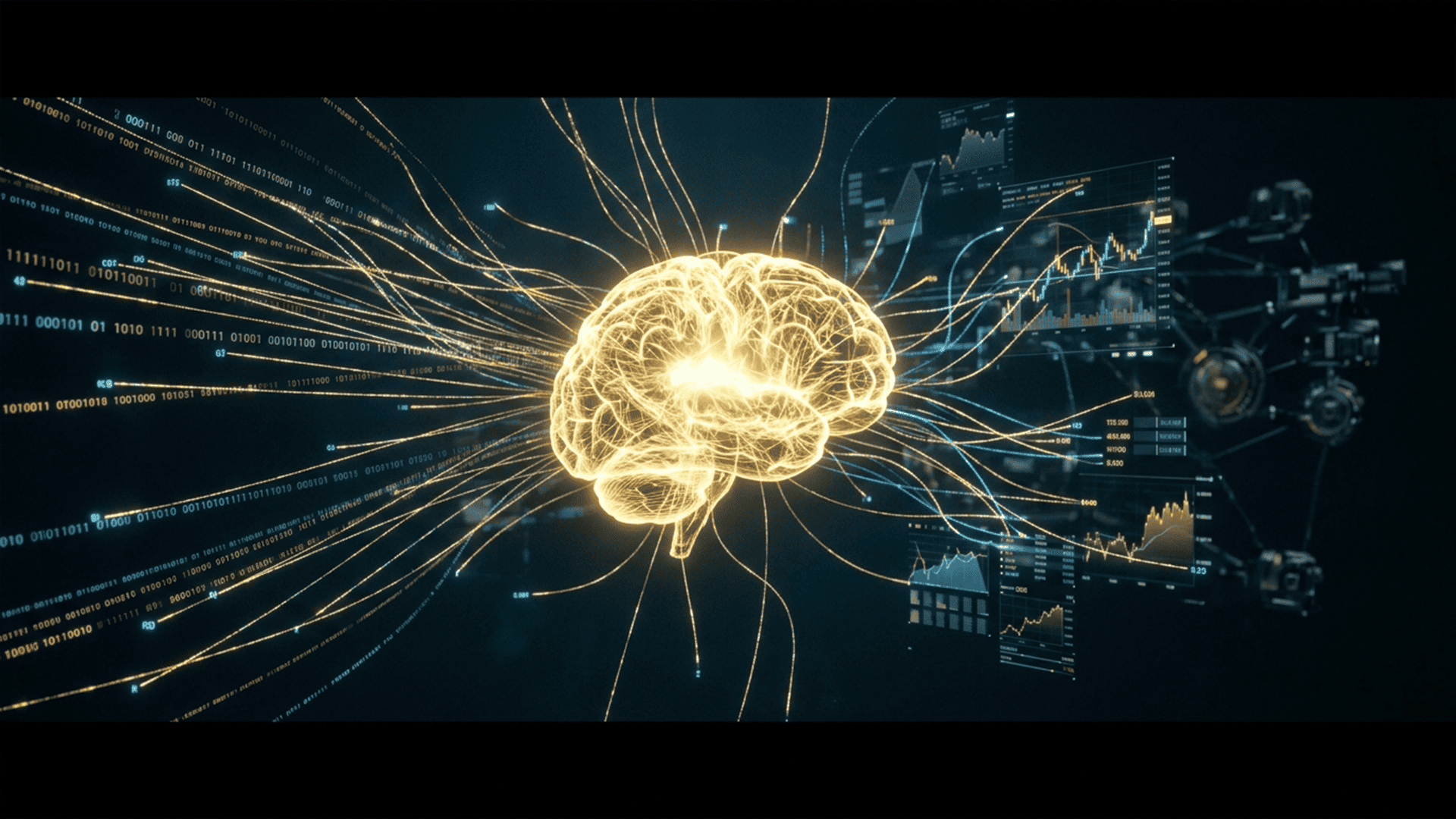
The Ability to Read the Market’s “Between the Lines” and “Heat” That Machines Cannot See
Does this mean we humans, inferior in both speed and capital, have no chance of surviving?
No. The ultimate AI for surviving the complex and bizarre forest of the market already exists inside your skull. It is the “human brain,” refined through hundreds of millions of years of evolution.
Where the human brain decisively holds an edge over AI is its “multidimensional contextual judgment ability.”
AI only sees “numbers,” interpreting the world through cold, inorganic logic like the slope of a line or the rate of deviation. In contrast, a trained human brain can feel the “body temperature (heat)” of living human beings writhing on the other side of the cold charts displayed on the monitor.
While AI reads the “lines,” humans can “read between the lines.”
For example, even when AI dictates a ‘buy’ because “the RSI has dropped below 30 and deviated from the moving average,” a human trader can look at the chart holistically and feel this:
- “A signal has definitely triggered, and normally it should bounce back nicely here.”
- “But for some reason, today it’s dragging down heavily and sluggishly.”
- “There are absolutely no lower wicks suggesting a bounce. Beyond just the shape, I sense something like a sheer obsession from the sellers saying, ‘We are going to drive this down no matter what.'”
This “intense sense of discomfort,” which is extremely difficult to quantify, is an area AI can absolutely never replicate. The “highly advanced pattern recognition ability” belongs solely to the brain of a trader who has stared at charts for thousands of hours and tasted pain with their own hard-earned money.
The judgment to step on the brake and say, “Let’s pass today,” even when a perfect signal is showing, is the absolute element that makes a pro a true pro.
The Process of “Multifaceted Judgment” Performed by Pros in Actual Combat
To prove that this is not mere psychological pep talk, let’s break down the thought process in actual combat.
Suppose you have a simple rule: “If the short-term MA crosses below the long-term MA (Death Cross) on the 15-minute chart, and the candlestick makes a pullback and starts dropping again, go short (sell).” An AI would finish this with a few lines of conditional statements, but in actual live trading, the human brain instantly processes the following “details and the big picture” simultaneously.
- The trend direction of the higher timeframes (1-hour or 4-hour charts) (Multiple Time Frame Analysis)
- Are there any significant resistance or support lines nearby?
- The “angle” of the moving averages when they crossed (Did it slice through cleanly at an acute angle, or tangle at an obtuse angle?)
- The “momentum” of the candlestick after breaking through (Did it drop vigorously, or fall while consolidating?)
- The “appearance of the wicks” on the candlestick when it bounced
Whether consciously or unconsciously, the brain instantly integrates these elements and makes real-time micro-adjustments down to the millimeter: “There’s a lot of noise this time, so I’ll pass,” “Looks like a fakeout is coming, so I’ll widen my stop-loss,” or “It’s an ironclad setup, so I’ll size up my position and let profits run.”
This is not based on mood or hunches, but because they hold a firm “single axis of rules” while observing a multifaceted array of surrounding environmental factors (the branches and leaves of the conditions).
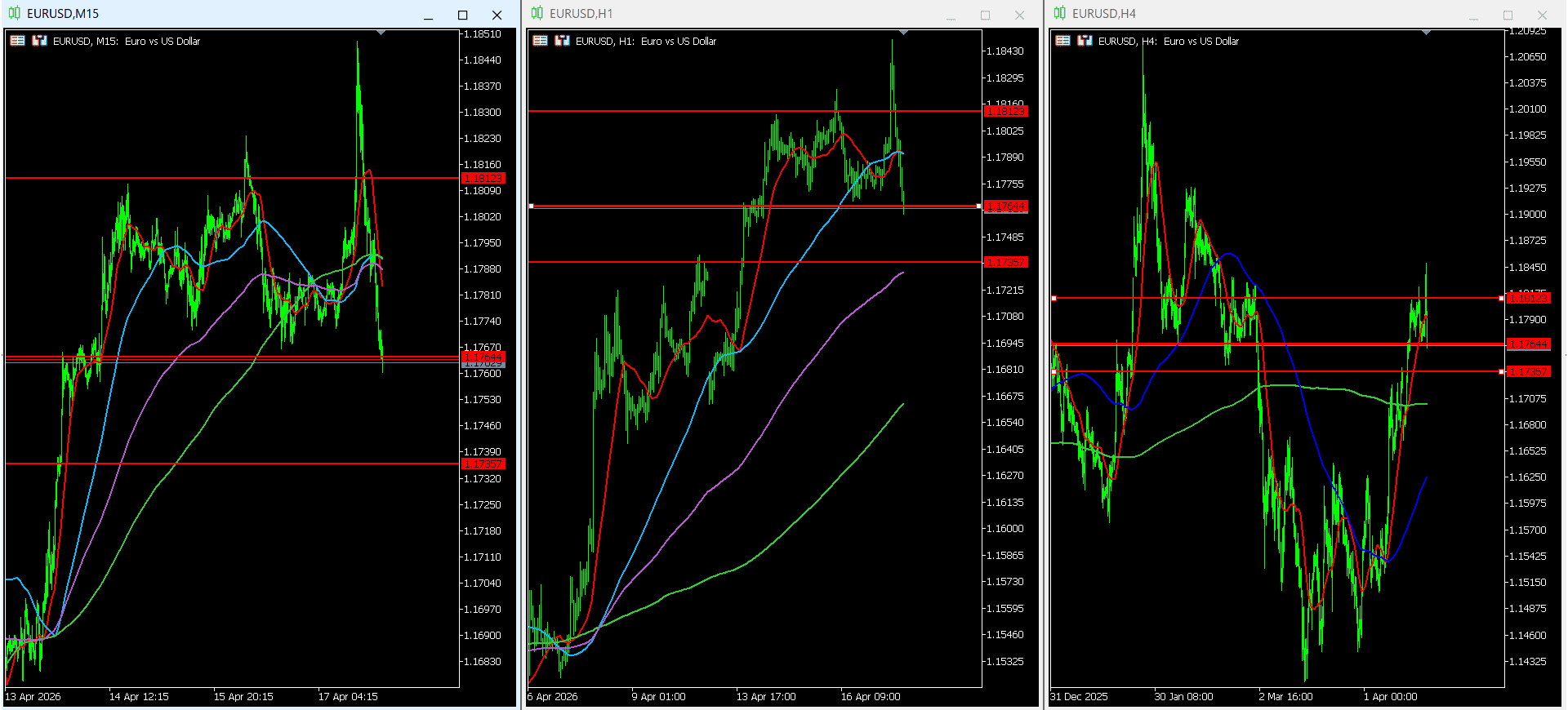
If you try to teach an AI all this, it will either become a completely useless EA that trades only a few times a year out of extreme fear of losing, or the conditions will be so loose that it becomes a system that “spams useless entries and bleeds to death by commissions.”
Even if it is finished with an exquisite balance, the moment the market’s volatility changes, all that painstakingly acquired training data becomes entirely useless.
How to Overcome Discretionary Trading’s Greatest Barrier: “Emotion,” and Establish Your Edge

Those of you who have read this far will likely have one question come to mind. “If the human brain is so brilliant, why do 90% of people who participate in the market end up consistently losing and dropping out?”
The answer is clear. It is because humans are equipped with the greatest weakness that machines lack: “Emotion.”
No matter how excellent a brain you have, no matter how perfectly you can sense the heat of the chart and draw up an ideal scenario, the moment you sit in front of a screen where your own money is moving, logic is derailed by thoughts like “I just don’t want to lose money” (fear) and “I want to make money faster and bigger” (greed).
- The moment you carry an unrealized loss, you push your stop-loss line away in prayer, expanding the wound.
- The moment a small profit appears, the fear of it retracing causes you to panic sell (cut profits short), missing out on a massive run.
The optimal actions logically derived by your brain are disrupted by the bug called emotion. That is exactly why trading requires blood, sweat, and “practice.” The “technique of mental control” to execute your established rules systematically like a machine without being swayed by fear or greed.
Just as you cannot ride a bicycle merely by reading a book about it, the process of exposing yourself to the real market with a small amount of capital, and training your mind and brain while enduring the pain, is absolutely indispensable.
However, a wonderful reward awaits those who overcome that rigorous training. As a payoff, we can acquire the “ultimate flexibility” that machines will never attain.
When you sense that yesterday’s methods are no longer working, you immediately stop, wipe the slate clean, and redraw your scenarios to match the new market conditions. In a market writhing with the varying intentions of humans, this flexibility becomes your greatest weapon.
Conclusion: The Conductor of the Market Symphony Must Not Be an EA (Automated Trading), But “You”
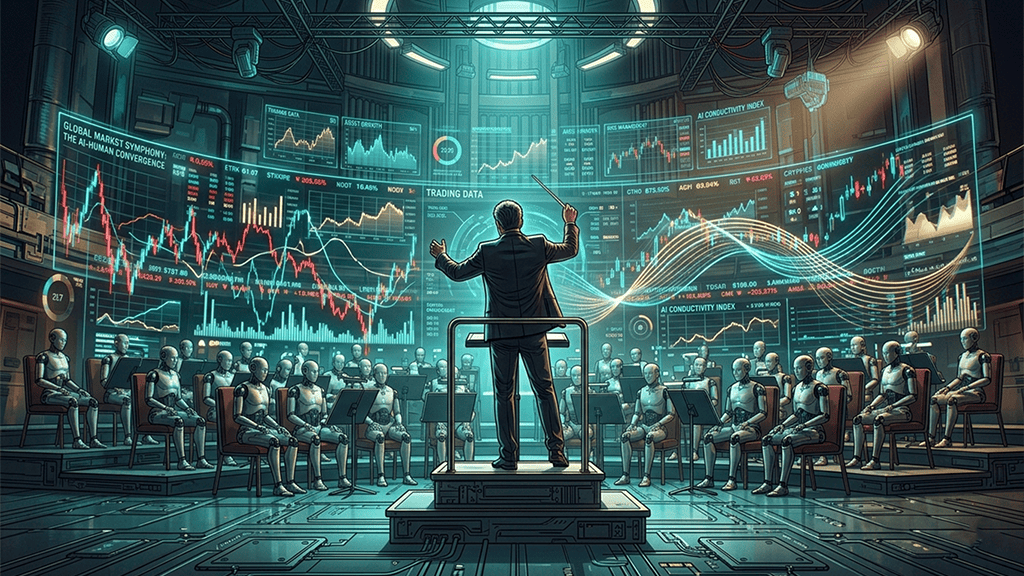
What we must never forget is that in the face of the massive force of nature that is the market, an individual’s power is incredibly helpless. All we can do is humbly observe the movements of the massive waves, not swim against them, and scoop out the maximum performance while protecting our capital as much as possible.
Please do not misunderstand; I am not entirely rejecting AI or tools. As a supporting role to quickly calculate indicator values or look up past statistics, they are highly reliable entities. However, AI can never become the “conductor” of the market to guide your capital.
Whether the calculated results will truly hold up in the incoming market environment. Sensing the heat and tenacity of the living people breathing behind the lifeless charts, and making the heavy decision to pull the final trigger (or let it pass)—the only thing capable of doing that is “your own brain,” forged through a myriad of experiences.
Let today be the end of seeking an easy escape route in tools that claim, “Buy this and you will profit automatically.” As long as you rely on machines for judgment, you will never be able to touch the true essence of the market.
- Hold a multifaceted perspective
- Learn the art of controlling your own emotions
- Continuously update the ultimate AI—your own brain
This is exactly the path that professional traders continue to walk—one that may seem like a detour at first glance, but is actually the most certain path to victory. Starting today, when you look at a chart, try not to see it merely as the movement of lines, but try to sense the “heat of the market” lying beneath it. Your evolution in trading begins right there.